
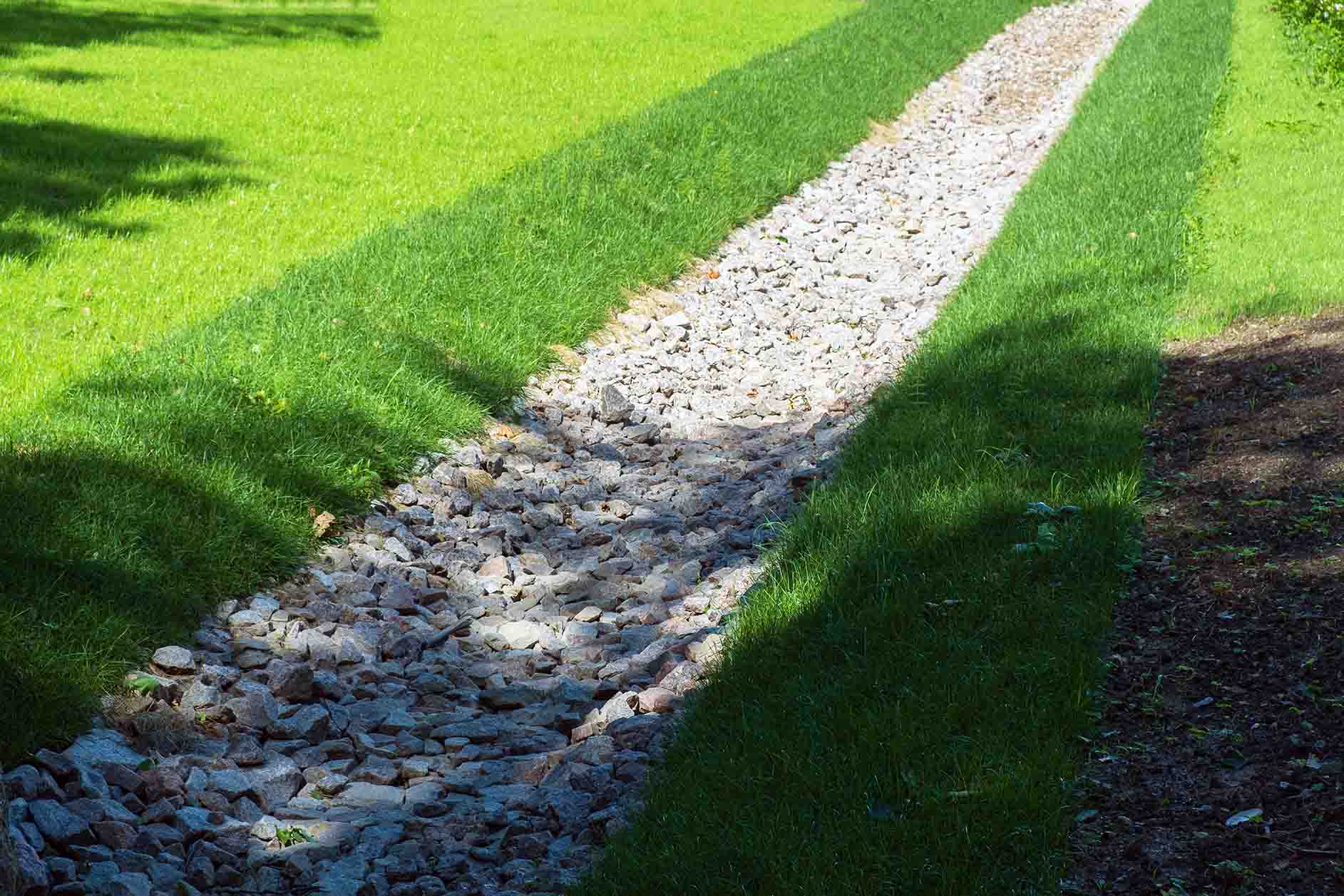
French Drain Installation

French drain installation is a time-tested and highly effective method for managing groundwater and alleviating drainage issues on residential, commercial, and agricultural properties. Designed to redirect subsurface water away from problem areas, a French drain helps prevent water buildup that can lead to foundation damage, basement flooding, soggy yards, or erosion.

The process begins with a strategic site assessment to identify areas where water tends to collect or where poor soil permeability is causing drainage problems. Based on the findings, a trench is carefully laid out and excavated along a downward slope to encourage natural water flow. The trench typically ranges in depth and width depending on the volume of water to be managed and the characteristics of the soil and surrounding terrain.

Once the trench is dug, it is lined with a permeable landscape fabric that helps keep soil and sediment out while still allowing water to pass through. A perforated pipe is then placed at the bottom of the trench, with the holes facing downward or sideways. This pipe serves as the main channel for collecting and directing excess groundwater. The trench is then backfilled with gravel or crushed stone, which promotes water flow around the pipe and acts as an additional filter layer. Finally, the landscape fabric is folded over the top of the gravel, and the trench may be topped with soil or decorative stone, depending on whether it will be covered or left exposed.

The genius of a French drain lies in its simplicity and functionality. As water seeps into the gravel-lined trench, it is filtered and funneled through the perforated pipe and away from vulnerable areas such as foundations, crawlspaces, patios, or low-lying sections of a yard. This reduces hydrostatic pressure against walls and helps keep basements dry and structures stable.

French drains are also commonly used in areas with heavy clay soil or poor natural drainage, where water tends to linger after rainfall. In landscaping, they can be part of a broader water management system to protect plantings and prevent erosion.