
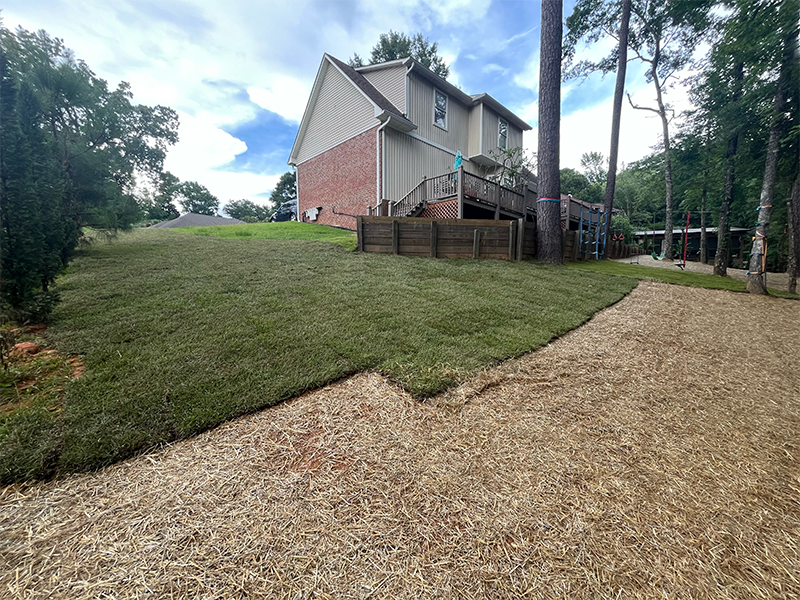
Seed/Sod Prep & Install

Soil preparation is the most critical part of sod installation. It typically starts with clearing the area of weeds, rocks, debris, or any old turf. Once the ground is cleared, it must be graded to ensure proper drainage—ideally sloping slightly away from buildings to prevent water accumulation. If the soil is poor in quality, amendments like organic matter, lime, or fertilizer may be added to improve its structure and fertility. Tilling the soil to a depth of several inches helps loosen compacted areas, and a light rolling or compacting afterward creates a stable, level base for the sod.

Once the ground is ready, the sod is carefully laid in a staggered, brick-like pattern to avoid long seams and create a more natural appearance. Installation usually starts along a straight edge, such as a sidewalk or driveway, and progresses outward. Edges are trimmed to fit around obstacles, and each piece is pressed firmly into the soil to remove air pockets and ensure good contact between roots and soil. A sod roller may be used to further press the sod into place and create a smooth, even surface.

Watering is essential after installation. The sod must be watered thoroughly and immediately to help the roots begin bonding with the underlying soil. During the first few weeks, the lawn should remain consistently moist but not soaked. Irrigating early in the morning helps reduce evaporation and prevents diseases that thrive in excessive moisture. After about two to three weeks, the sod should be well-rooted, and regular mowing can begin. A light application of starter fertilizer may also help promote early growth and rooting.

While sod installation is typically more expensive than seeding, the benefits are clear. Sod offers instant visual appeal, which can immediately boost property value and curb appeal. It also provides effective erosion control, making it ideal for sloped or unstable areas. Because the grass is already mature when installed, it crowds out weeds more effectively and requires less maintenance during the early establishment period. Most importantly, sod can usually be walked on and enjoyed just a few weeks after installation, unlike seeded lawns which may take months to mature.

Sod preparation and installation is a fast, efficient, and highly effective way to create a beautiful, healthy lawn. With proper planning, soil preparation, and ongoing care, sod can provide lasting beauty and functionality, making it a popular choice for both residential and commercial landscaping projects.